Viruses the Government Dont Want You to Know About
Why smart people believe coronavirus myths
(Epitome credit:
Getty Images
)

From students to politicians, many smart people have fallen for dangerous lies spread almost the new coronavirus. Why? And how can you protect yourself from misinformation?
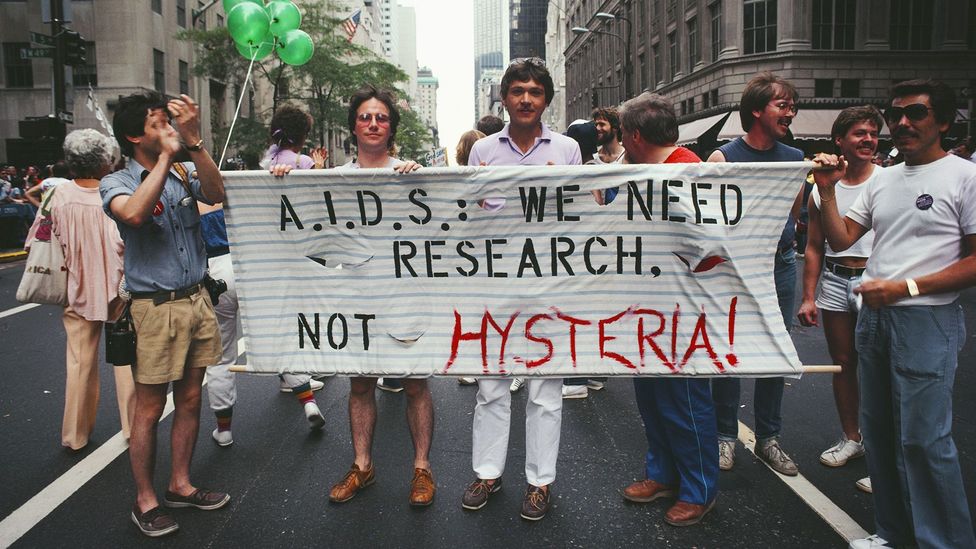
In past decades, unsafe lies spread about Aids which exacerbated the crisis (Credit: Getty Images)
Nosotros've debunked several claims hither on BBC Future, including misinformation effectually how sunshine, warm weather and drinking water can touch the coronavirus. The BBC's Reality Bank check team is also checking pop coronavirus claims, and the World Health Organization is keeping a myth-busting page regularly updated too.
You lot might as well like:
- What is Covid-nineteen's existent death rate?
- How fear of the coronavirus warps our minds
- What Covid-19 ways for the environment
At worst, the ideas themselves are harmful – a recent report from one province in Iran plant that more than people had died from drinking industrial-strength alcohol, based on a imitation merits that it could protect yous from Covid-19, than from the virus itself. Merely even seemingly innocuous ideas could lure you and others into a simulated sense of security, discouraging you from adhering to government guidelines, and eroding trust in health officials and organisations.
In that location's evidence these ideas are sticking. One poll by YouGov and the Economist in March 2020 found 13% of Americans believed the Covid-nineteen crisis was a hoax, for instance, while a whopping 49% believed the epidemic might exist homo-made. And while you might hope that greater brainpower or education would assist u.s. to tell fact from fiction, it is like shooting fish in a barrel to find examples of many educated people falling for this false information.
Just consider the writer Kelly Brogan, a prominent Covid-19 conspiracy theorist; she has a degree from the Massachusetts Plant of Technology and studied psychiatry at Cornell University. Yet she has shunned clear evidence of the virus's danger in countries like China and Italy. She fifty-fifty went as far equally to question the basic tenets of germ theory itself while endorsing pseudoscientific ideas.
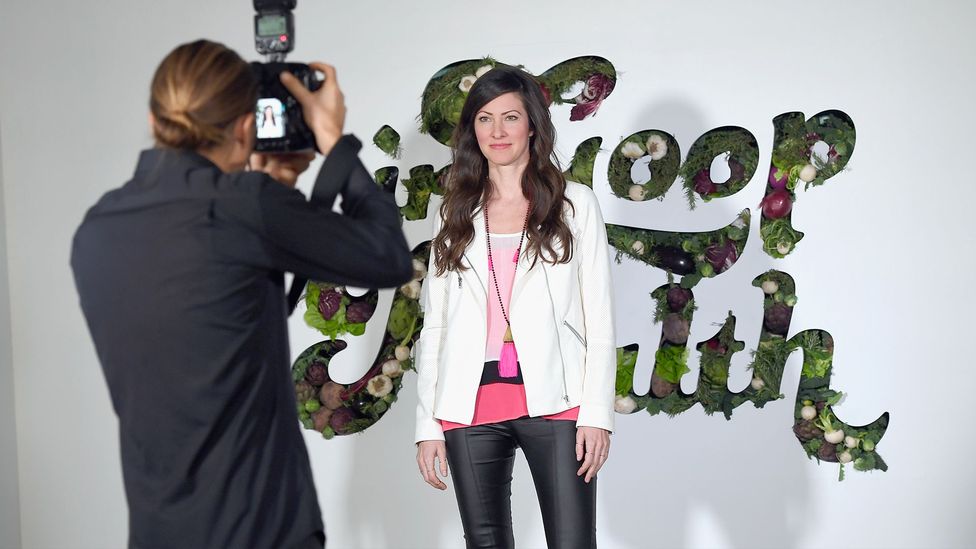
Kelly Brogan received a medical degree from Cornell University, yet has questioned germ theory and the existence of Covid-19 (Credit: Getty Images)
Even some world leaders – who you would hope to have greater discernment when information technology comes to unfounded rumours – have been guilty of spreading inaccurate information about the run a risk of the outbreak and promoting unproven remedies that may do more damage than proficient, leading Twitter and Facebook to have the unprecedented step of removing their posts.
Fortunately, psychologists are already studying this phenomenon. And what they find might suggest new means to protect ourselves from lies and assistance stem the spread of this misinformation and foolish behaviour.
Data overload
Part of the trouble arises from the nature of the messages themselves.
We are bombarded with data all day, every twenty-four hour period, and nosotros therefore often rely on our intuition to determine whether something is authentic. Every bit BBC Time to come has described in the past, purveyors of false news can make their message feel "truthy" through a few simple tricks, which discourages united states from applying our critical thinking skills – such equally checking the veracity of its source. Equally the authors of one newspaper put it: "When thoughts flow smoothly, people nod forth."
Eryn Newman at Australian National University, for instance, has shown that the simple presence of an prototype alongside a statement increases our trust in its accuracy – fifty-fifty if information technology is merely tangentially related to the merits. A generic paradigm of a virus accompanying some claim almost a new treatment, say, may offering no proof of the statement itself, only it helps us visualise the general scenario. We take that "processing fluency" as a sign that the claim is true.
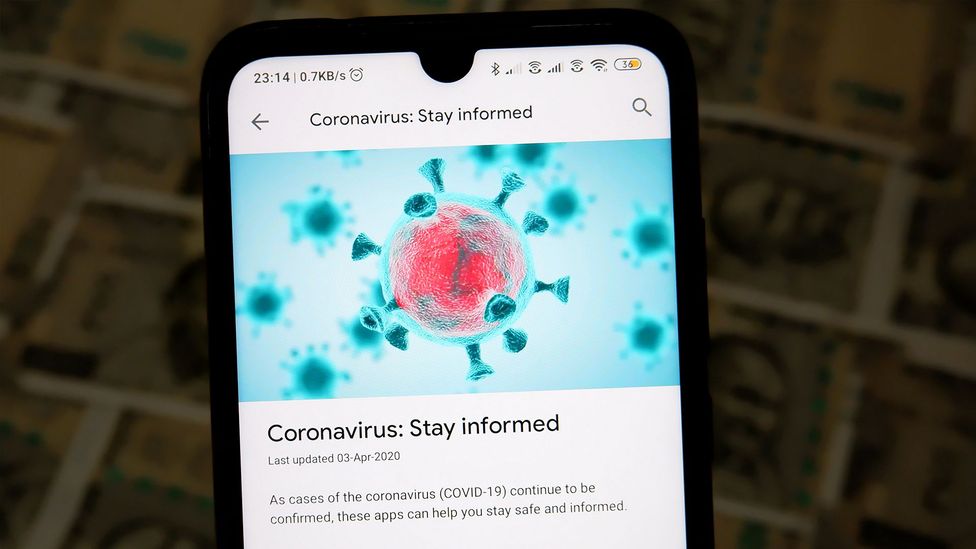
The mere presence of an image aslope a statement increases our trust in its accuracy (Credit: Getty Images)
For similar reasons, misinformation will include descriptive language or vivid personal stories. It will besides feature simply enough familiar facts or figures – such every bit mentioning the proper name of a recognised medical body – to make the prevarication within experience disarming, assuasive it to tether itself to our previous knowledge.
Fifty-fifty the simple repetition of a statement – whether the same text, or over multiple messages – can increment the "truthiness" past increasing feelings of familiarity, which we mistake for factual accuracy. So, the more than often we see something in our news feed, the more likely we are to think that it's true – even if nosotros were originally sceptical.
Sharing before thinking
These tricks accept long been known by propagandists and peddlers of misinformation, but today's social media may exaggerate our gullible tendencies. Recent evidence shows that many people reflexively share content without fifty-fifty thinking nigh its accurateness.
Gordon Pennycook, a leading researcher into the psychology of misinformation at the University of Regina, Canada, asked participants to consider a mixture of true and faux headlines about the coronavirus outbreak. When they were specifically asked to approximate the accurateness of the statements, the participants said the simulated news was true nearly 25% of time. When they were simply asked whether they would share the headline, however, around 35% said they would pass on the fake news – 10% more.
"It suggests people were sharing material that they could accept known was fake, if they had idea about it more direct," Pennycook says. (Like much of the cutting-border inquiry on Covid-19, this inquiry has not yet been peer-reviewed, but a pre-impress has been uploaded to the Psyarxiv website.)
Peradventure their brains were engaged in wondering whether a statement would get likes and retweets rather than considering its accurateness. "Social media doesn't incentivise truth," Pennycook says. "What it incentivises is engagement."
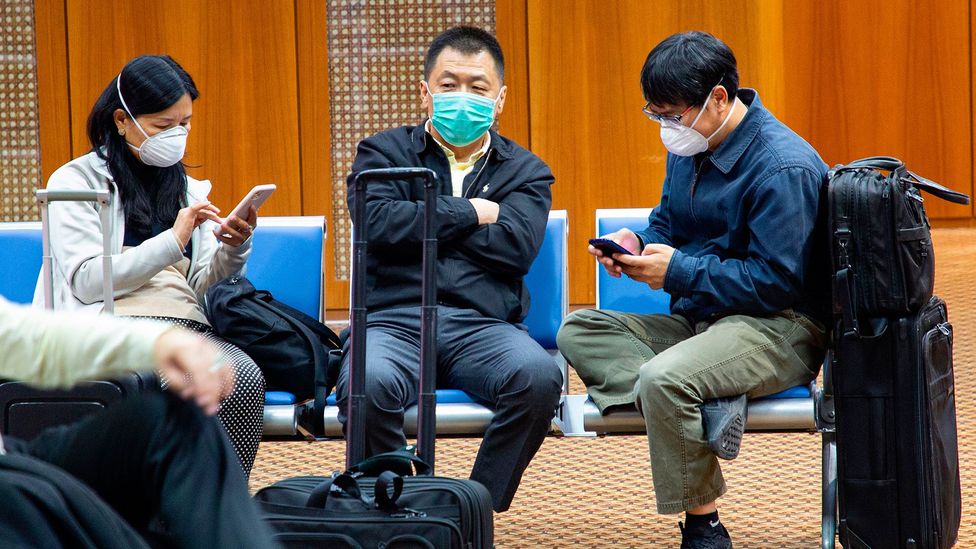
Research suggests that some people share material they would know was false if they thought about it more directly (Credit: Getty Images)
Or perhaps they thought they could shift responsibility on to others to estimate: many people take been sharing false information with a sort of disclaimer at the height, proverb something like "I don't know if this is true, simply…". They may think that if at that place'due south whatsoever truth to the information, it could be helpful to friends and followers, and if it isn't true, it'southward harmless – so the impetus is to share it, not realising that sharing causes harm too.
Whether information technology'south promises of a homemade remedy or claims about some kind of dark government cover-upward, the promise of eliciting a strong response in their followers distracts people from the obvious question.
This question should be, of course: is it true?
Override reactions
Classic psychological research shows that some people are naturally better at overriding their reflexive responses than others. This finding may help united states sympathise why some people are more than susceptible to fake news than others.
Researchers similar Pennycook utilise a tool chosen the "cognitive reflection test" or CRT to measure this tendency. To understand how it works, consider the following question:
- Emily'southward father has three daughters. The kickoff two are named April and May. What is the third daughter's name?
Did you lot reply June? That'due south the intuitive reply that many people give – but the correct answer is, of class, Emily.
To come up to that solution, you need to break and override that initial gut response. For this reason, CRT questions are non so much a test of raw intelligence, equally a test of someone's trend to employ their intelligence by thinking things through in a deliberative, analytical fashion, rather than going with your initial intuitions. The people who don't do this are often called "cognitive misers" by psychologists, since they may be in possession of substantial mental reserves, only they don't "spend" them.
Cognitive miserliness renders us susceptible to many cognitive biases, and it also seems to change the way we consume data (and misinformation).
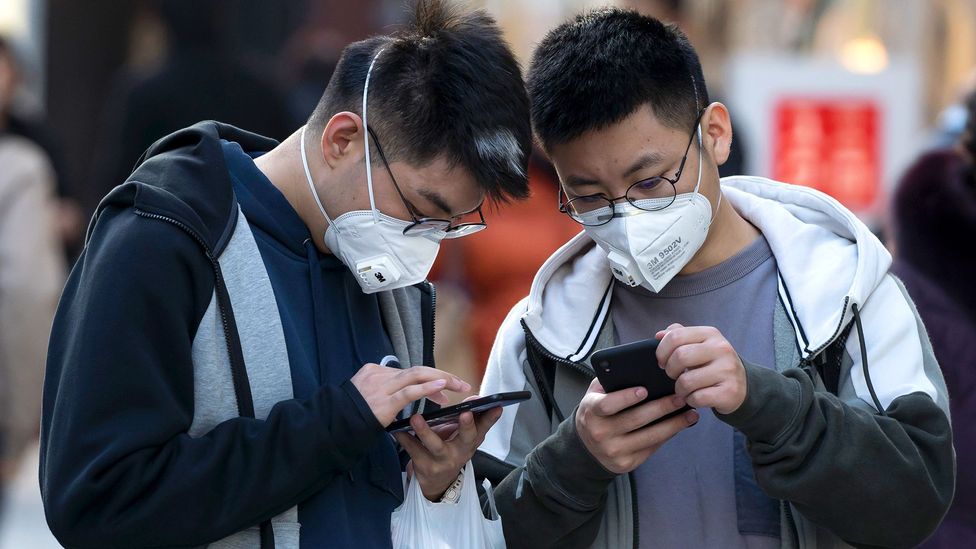
We consume headlines and posts differently depending on our amount of 'cognitive miserliness' (Credit: Getty Images)
When information technology came to the coronavirus statements, for instance, Pennycook found that people who scored badly on the CRT were less discerning in the statements that they believed and were willing to share.
Matthew Stanley, at Duke University in Durham, North Carolina, has reported a like blueprint in people's susceptibility to the coronavirus hoax theories. Remember that around 13% of US citizens believed this theory, which could potentially discourage hygiene and social distancing. "Thirteen percent seems like plenty to make this [virus] go around very speedily," Stanley says.
Testing participants soon afterwards the original YouGov/Economist poll was conducted, he found that people who scored worse on the CRT were significantly more susceptible to these flawed arguments.
These cognitive misers were too less likely to study having inverse their behaviour to finish the disease from spreading – such as handwashing and social distancing.
Stop the spread
Knowing that many people – fifty-fifty the intelligent and educated – take these "miserly" tendencies to accept misinformation at face value might help u.s. to stop the spread of misinformation.
Given the work on truthiness – the thought that we "nod forth when thoughts flow smoothly" – organisations attempting to debunk a myth should avoid being overly complex.
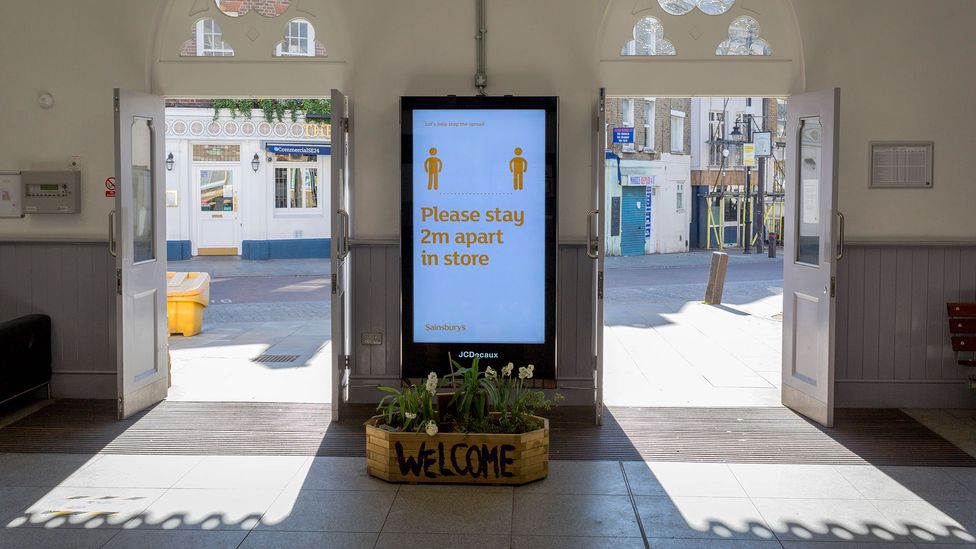
To fight misinformation, information technology'southward of import to present the facts every bit but equally possible (Credit: Getty Images)
Instead, they should present the facts as simply as possible – preferably with aids like images and graphs that make the ideas easier to visualise. Equally Stanley puts it: "We need more communications and strategy piece of work to target those folks who are not every bit willing to be reflective and deliberative." It'due south simply not skillful enough to present a sound statement and hope that it sticks.
If they can, these campaigns should avoid repeating the myths themselves. The repetition makes the idea feel more familiar, which could increase perceptions of truthiness. That'southward not always possible, of grade. Simply campaigns can at least try to make the true facts more prominent and more than memorable than the myths, then they are more probable to stick in people's minds. (It is for this reason that I've given equally little data as possible nigh the hoax theories in this article.)
When it comes to our own online behaviour, we might try to undo from the emotion of the content and think a bit more than almost its factual basis before passing it on. Is it based on hearsay or hard scientific evidence? Can you trace it dorsum to the original source? How does it compare to the existing data? And is the author relying on the common logical fallacies to make their case?
I thing we tin can do is simply call back about a mail service'southward factual footing earlier we pass information technology on (Credit: Getty Images)
These are the questions that nosotros should exist asking – rather than whether or not the postal service is going to showtime amassing likes, or whether it "could" be helpful to others. And at that place is some evidence that nosotros tin can all get ameliorate at this kind of thinking with practice.
Pennycook suggests that social media networks could nudge their users to be more than discerning with relatively straightforward interventions. In his experiments, he found that request participants to rate the factual accuracy of a single claim primed participants to start thinking more critically about other statements, so that they were more than than twice as discerning about the information they shared.
In practice, it might exist as simple as a social media platform providing the occasional automated reminder to think twice earlier sharing, though conscientious testing could help the companies to detect the most reliable strategy, he says.
There is no panacea. Similar our attempts to contain the virus itself, we are going to need a multi-pronged approach to fight the broadcasting of dangerous and potentially life-threatening misinformation.
And every bit the crisis deepens, it volition be anybody'southward responsibleness to stem that spread.
--
David Robson is the writer of The Intelligence Trap , which examines why smart people human activity foolishly and the ways we can all make wiser decisions. He is @d_a_robson on Twitter.
As an accolade-winning scientific discipline site, BBC Future is committed to bringing you bear witness-based analysis and myth-busting stories around the new coronavirus. Yous can read more of our Covid-19 coverage here .
--
Join ane million Future fans past liking us on Facebook , or follow united states on Twitter or Instagram .
If you lot liked this story, sign up for the weekly bbc.com features newsletter , called "The Essential List". A handpicked choice of stories from BBC Future, Culture, Worklife, and Travel, delivered to your inbox every Fri.
Source: https://www.bbc.com/future/article/20200406-why-smart-people-believe-coronavirus-myths
0 Response to "Viruses the Government Dont Want You to Know About"
Post a Comment